
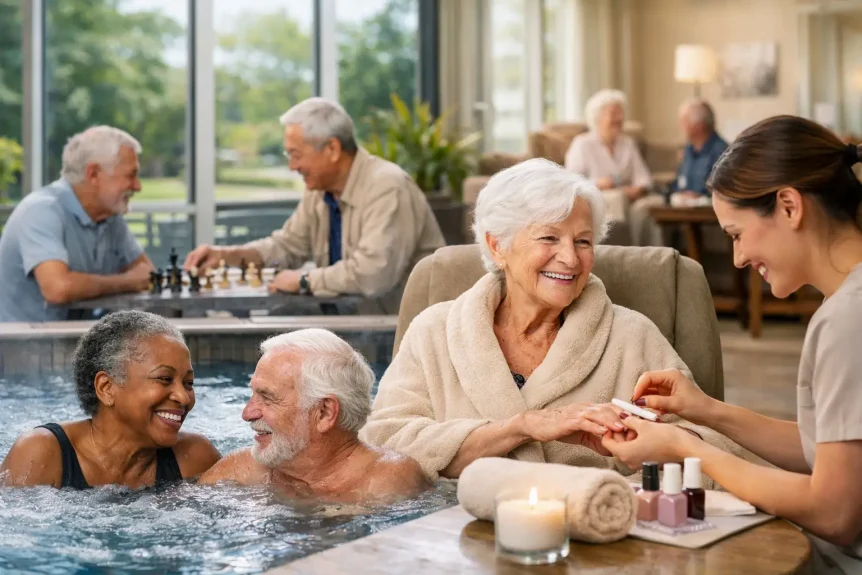
Best Amenities for Assisted Living Residents
A beautiful dining room or a busy activity calendar can make a strong first impression. But when families compare the best amenities assisted living communities can provide, the real question is more personal: Will this place help my loved one feel comfortable, known, safe, and at home?
The right amenities do more than fill a brochure. They shape the rhythm of each day, make it easier to maintain independence, and create natural opportunities for friendship, purpose, and joy. For an older adult making a major transition, those details matter deeply.
The Best Amenities in Assisted Living Support Daily Life
An amenity is valuable when it makes everyday life easier or more meaningful. A community may offer many attractive features, but families should look beyond the number of options and consider how residents actually use them.
Start with the spaces that support a resident’s ordinary routine. Comfortable private or companion apartments, accessible bathrooms, housekeeping, laundry service, and maintenance support can remove burdens that have become difficult at home. These services preserve energy for the parts of life a resident still enjoys.
Dining is another essential consideration. Mealtimes are not simply about nutrition. They are a chance to gather, talk, celebrate, and feel part of a community. Look for inviting dining spaces, thoughtfully prepared meals, and flexibility for individual preferences or dietary needs. A resident should be able to look forward to sitting down for a meal, not view it as another task to manage.
Transportation can also have an outsized effect on independence. Scheduled rides for appointments, errands, local outings, and community events help residents remain connected to the wider world without the stress of driving or arranging a ride alone. The best arrangement depends on the resident’s needs, but reliable transportation can offer meaningful reassurance to the whole family.
Wellness Should Feel Personal, Not Prescribed
Wellness amenities are often discussed in terms of fitness rooms and exercise classes. Those can be valuable, especially when programming is designed for different mobility levels. Yet wellness in assisted living is broader than physical activity.
A strong community creates opportunities for residents to care for their bodies, minds, and spirits in ways that feel welcoming rather than demanding. This may include walking paths, balance and movement classes, gardening, music, art, devotional opportunities, or quiet places to sit outdoors. Some residents want a full calendar. Others may prefer a peaceful morning with coffee, a favorite book, and a conversation with a neighbor.
Families should ask how staff members encourage participation without pressure. The goal is not to keep every resident constantly busy. It is to make meaningful choices accessible, including choices for residents who are shy, grieving, adjusting to a new home, or living with changing abilities.
Connection Is One of the Most Meaningful Amenities
Loneliness can be a serious concern for older adults, particularly after a move, the loss of a spouse, or changes in mobility. A well-designed community helps connection happen naturally.
Shared living rooms, inviting patios, welcoming gathering spaces, and small seating areas can make it easy to pause and talk. Regular activities give residents a reason to come together, but the atmosphere matters just as much as the event itself. A warm, attentive team can help newcomers feel included and notice when someone may need extra encouragement.
When touring, pay attention to what you see between scheduled activities. Are residents talking with one another? Does the team know people by name? Do common spaces feel lived in and comfortable, or do they feel like rooms that are rarely used? These everyday observations can tell you more than an activity calendar alone.
Family connection deserves consideration, too. Look for spaces where loved ones can visit comfortably, share a meal, celebrate a birthday, or simply spend unhurried time together. Moving into assisted living should not make family life smaller. The right community makes it easier to continue creating memories.
Safety Features Should Protect Dignity
Safety is nonnegotiable, but it should never make a residence feel cold or institutional. The best amenities for assisted living combine thoughtful safeguards with an environment that respects privacy and independence.
Accessible layouts, well-lit hallways, handrails, emergency response systems, secure entrances, and staff available around the clock all contribute to peace of mind. However, a family should also ask how these features work in practice. Who responds to an alert? How quickly? How is the care plan adjusted when a resident’s needs change?
For a loved one with memory loss, specialized Memory Care may be more appropriate than traditional assisted living. Secure outdoor areas, calming common spaces, purposeful programming, and team members trained in dementia care can be especially important. Not every amenity is suitable for every person, and choosing the right level of support is an act of care, not a limitation.
Thoughtful Design Changes How a Community Feels
The physical setting has a quiet but lasting influence on quality of life. Natural light, comfortable furnishings, clear wayfinding, outdoor views, and a residential scale can help a community feel less like a facility and more like a true home.
Design is not merely decoration. A well-planned layout can make it easier for residents to navigate, find social spaces, and move safely throughout the day. It can also help families feel more at ease during visits. At Cooperwood Senior Living, the community’s award-recognized design reflects the belief that elevated surroundings and compassionate care belong together.
During a tour, take your time. Notice whether the environment feels calm, clean, and welcoming. Consider where your loved one might enjoy reading, visiting, walking, or relaxing. A polished lobby is pleasant, but the spaces residents use every day deserve the closest attention.
Ask Whether Amenities Are Included and Available
A long amenity list can be misleading if families do not understand what is included in the monthly rate, what requires an additional fee, and how often services are available. For example, transportation may be scheduled only on certain days, salon services may be separate, and care needs may affect the overall cost.
Clear answers are a sign of a trustworthy community. Ask what happens if your loved one needs more assistance over time, whether activities are available every day, and how the team accommodates preferences around meals, routines, and personal care. Families deserve a straightforward picture before making a decision.
It is also wise to distinguish between amenities that sound appealing and those your loved one will genuinely enjoy. A movie theater may be wonderful for one resident, while another may care much more about a sunny courtyard, faith-based programming, or being able to bring a beloved pet. The best choice is not the community with the longest list. It is the one where the offerings fit the person.
A Tour Helps You See What a List Cannot
Amenities matter most when they are supported by genuine hospitality. A lovely space has little value if residents do not feel welcome there. Likewise, a full schedule cannot replace caregivers who listen carefully, respond respectfully, and treat each resident as an individual.
Bring your loved one into the conversation whenever possible. Ask what would make daily life feel easier, what they would miss about home, and what they hope to have more of. Their answers may surprise you, and they can guide a more confident decision.
The right assisted living community offers more than convenience. It offers a setting where comfort, wellness, and love are present in the ordinary moments of each day. When you visit, trust both the questions you ask and the feeling you carry with you afterward.