
15 Game Ideas for Grandkids That Bring Joy
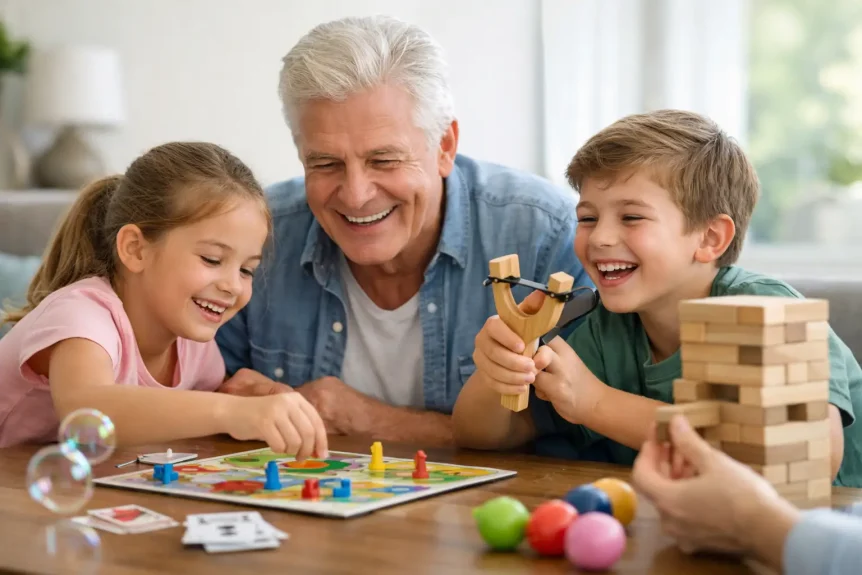
Few things matter more than hearing a child laugh with a grandparent. The right Game Ideas for Grandkids can turn an ordinary afternoon into a memory a family talks about for years. They do more than pass the time, too. Good games help children feel close, help older adults stay engaged, and create moments of comfort, confidence, and genuine joy.
For many families, the challenge is not wanting to connect. It is figuring out what will actually work. A fast-paced game may be too frustrating. A game with tiny pieces may be hard to manage. A child may have a short attention span, while a grandparent may tire more quickly than they used to. The best choice is usually simple, flexible, and easy to enjoy together without pressure.
What makes a game work across generations
The strongest family games are not always the fanciest or the newest. They are the ones that make room for conversation, laughter, and small wins. Grandchildren want attention and fun. Grandparents often want to feel capable, included, and relaxed. A good game meets both needs.
That usually means keeping rules straightforward and rounds fairly short. It also helps to choose activities that can be adapted on the spot. If a grandchild is five, the game may need more movement and imagination. If a grandparent is living with memory loss, the game should rely less on complex recall and more on familiar objects, repetition, and gentle guidance.
There is also value in choosing games that allow side-by-side participation rather than direct competition. Some grandparents love a little friendly challenge, but others enjoy games more when there is no pressure to keep score. Cooperative play often creates a calmer, warmer experience.
Indoor game ideas for grandkids on everyday visits
A simple card match game is often a favorite because it is easy to set up and easy to change. You can use a deck of picture cards, family photos, or even hand-drawn cards made by the grandchildren. Turn them face down, take turns flipping them, and celebrate every match. For older adults who benefit from memory support, fewer cards and larger images can make the game more successful.
Bingo remains one of the most dependable options across generations. Children love the excitement of finding the next space, and grandparents usually recognize the format right away. You can make it more personal by using themes like animals, colors, favorite foods, or family names. The familiar rhythm of the game helps everyone settle in and enjoy the moment.
Another strong choice is a storytelling jar. Write simple prompts on slips of paper and place them in a bowl or jar. A child might pick, “Tell me about your first pet,” or “What games did you play when you were little?” Then the grandparent can answer, and the child can answer a similar question too. It feels playful, but it also opens the door to meaningful conversation and shared family history.
Puzzles can work beautifully when you choose the right level. A large-piece puzzle with bright, cheerful images gives both generations something to focus on together. There is no rush, no winning or losing, and plenty of room for encouragement. For some families, a puzzle on the table throughout a visit creates a calm gathering point that people return to naturally.
Active games that do not feel overwhelming
Not every game has to happen at a table. Gentle movement can lift energy and make children feel more engaged, especially on longer visits. The key is choosing active games that feel safe and manageable.
Balloon toss is a wonderful example. A balloon moves slowly enough for many older adults to track and tap without stress, and kids usually find it hilarious. You can count how many taps happen before it touches the floor, or simply enjoy keeping it in the air together. It is low-pressure and full of laughter.
A scavenger hunt can also be adapted to almost any setting. Keep the list simple: find something soft, something blue, something that smells good, or something that reminds you of summer. In a home or community setting, this game encourages light movement and observation without becoming too physically demanding.
If the grandchild is especially energetic, try freeze dance with softer music and a slower pace. The goal is not high performance. It is shared fun. A seated version works just as well, with hand motions, clapping, and swaying in time to favorite songs. Familiar music often helps older adults feel more relaxed and involved.
Game Ideas for Grandkids when memory support matters
When a grandparent is living with cognitive change, the best games are often the simplest ones. Success matters more than complexity. Families sometimes worry that visits will feel awkward, but the right activity can bring ease back into the room.
Sorting games are a strong option. Children and grandparents can sort buttons by color, playing cards by suit, or craft pom-poms by size. It may sound basic, but these activities create purpose, rhythm, and easy conversation. They also give a child something concrete to do, which often helps everyone feel more comfortable.
Name that tune is another gentle favorite. Hum a familiar song or play the first few seconds and invite the grandparent and grandchild to guess it together. Even when names or details are hard to retrieve, music often reaches places that conversation cannot. A child joining in with claps or singing makes the moment feel lighter and more natural.
Picture guessing works well too. Use family photos, magazine images, or simple flashcards. Ask easy questions such as, “Is this a dog or a cat?” or “Who is wearing the red shirt?” The goal is not to test memory. The goal is to invite engagement, recognition, and connection.
In communities that offer Memory Care, caregivers often see that repetitive, sensory-friendly games work best because they reduce frustration. Familiar routines, warm encouragement, and a peaceful setting can make a short game visit feel deeply meaningful.
Creative games that become keepsakes
Some of the best games leave something behind. That can be especially comforting for families who want visits to feel meaningful, not rushed.
A drawing challenge is a simple place to start. Fold paper into sections, let one person begin a picture, and pass it along for the next person to add to it. The result is usually funny, imperfect, and charming. More importantly, it gives grandkids a way to create with a grandparent rather than just talk.
You can also try build-a-story. One person begins with a sentence like, “Once upon a time, a duck walked into the kitchen,” and each person adds one line. Young children love the silliness, and grandparents often enjoy seeing where the imagination goes. If writing is difficult, tell the story out loud and have someone else record it.
Another lovely option is family trivia made simple. Ask questions a child can help answer, such as, “What is Grandpa’s favorite pie?” or “Who in the family likes to fish?” This turns family knowledge into a game while reinforcing identity and belonging.
How to choose the right game for your visit
The best plan is to think less about entertainment and more about fit. A short visit may call for one familiar game rather than several new ones. A child who is shy may connect better through coloring or picture cards than through questions. A grandparent who tires easily may enjoy ten minutes of play and then a snack or quiet conversation.
It also helps to keep expectations gentle. If the rules need to change midway, that is fine. If no one finishes the game, that is fine too. The point is not perfect play. The point is spending time together in a way that feels warm and successful.
Families sometimes make the mistake of choosing games based on what used to work years ago. It is kinder to choose based on what works now. That may mean larger cards, fewer choices, more visual cues, or quieter activities. Those small adjustments protect dignity and make the experience better for everyone.
A few easy favorites to keep on hand
If you want a reliable rotation, keep a few simple options nearby: bingo cards, large-print playing cards, a soft balloon, a puzzle with large pieces, family photos, and a jar of conversation prompts. None of these require much setup, and all of them can be adapted for different ages and abilities.
In a welcoming senior living setting, shared spaces and thoughtful support can make these visits even easier. At Cooperwood Senior Living, families often find that meaningful connection does not have to be complicated. Sometimes it begins with a simple game, a familiar song, and the comfort of being together.
The most memorable visits are rarely the most elaborate ones. They are the ones where a child feels seen, a grandparent feels included, and the room feels full of love. A simple game can do that beautifully.