
Life in the 1950s: What Daily Life Felt Like
Ask someone who lived through the decade, and life in the 1950s usually comes back in vivid pieces: a radio on in the kitchen, pressed clothes on the line, a neighborhood full of familiar faces, and routines that felt steady from one day to the next. For many older adults, these memories are not just history. They are part of identity, comfort, and the way a life story is held together.
That is one reason the 1950s still matter so much today, especially for families caring for an aging loved one. When we understand what daily life looked like then, we better understand the values, habits, and memories that often remain deeply meaningful later in life.
What life in the 1950s looked like at home
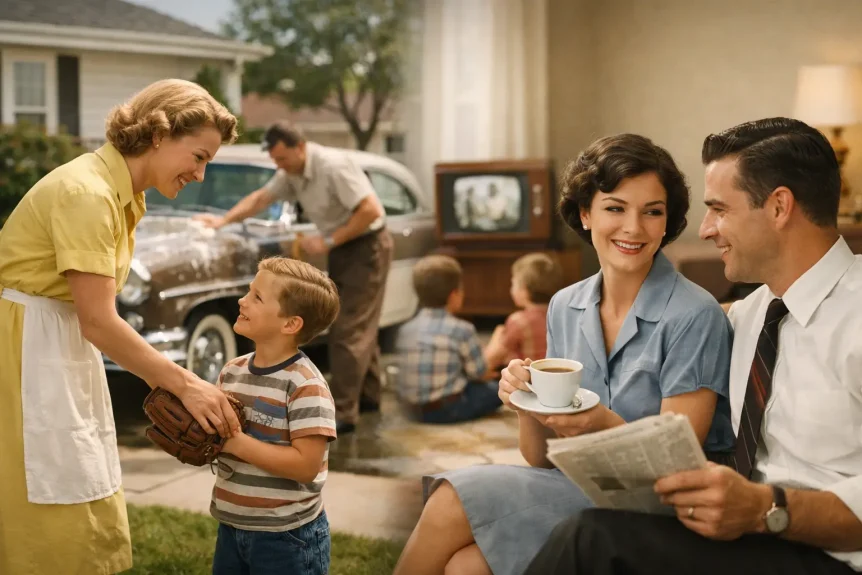
Home life in the 1950s often revolved around structure. Meals happened at regular times. Children were expected home by supper. Sunday routines, church attendance, school activities, and family visits gave the week a predictable rhythm. In many households, the father worked outside the home while the mother managed the house, though that picture was never universal and left out the reality of many working women, single parents, and families whose daily lives looked different.
Even so, the broader culture promoted a strong ideal of domestic order. Kitchens became symbols of modern convenience, with refrigerators, washing machines, and other appliances becoming more common. These changes reduced some household labor, but they did not erase it. Keeping a home running still required time, discipline, and effort.
For older adults today, those routines can remain deeply familiar. A preference for folded linens, set mealtimes, polished shoes, or a tidy table is often rooted in the era that shaped them. What may look like a simple habit can actually reflect a lifelong sense of dignity and comfort.
Family roles, expectations, and belonging
The 1950s are often remembered as family-centered, and in many ways they were. Extended family ties were strong. Grandparents often played an active role in daily life. Neighbors knew one another. Communities could feel close-knit, especially in smaller towns and suburban neighborhoods.
At the same time, expectations were strict. Social roles were more clearly defined, and there was intense pressure to fit in. Men were often expected to provide. Women were often expected to marry, raise children, and maintain the home. Young people were encouraged to be polite, modest, and respectful of authority.
That sense of belonging brought comfort for many people, but it could also be limiting. Not everyone felt seen or included. Families of color, people living in poverty, divorced women, and anyone who lived outside the era’s social norms often faced real barriers and unfair treatment.
When families talk with older loved ones about the 1950s, both truths can be present at once. The decade may hold treasured memories of family closeness, while also carrying experiences of hardship or exclusion. Listening with warmth and curiosity makes room for both.
Work, money, and the promise of stability
A defining feature of life in the 1950s was the belief that hard work would lead to a better future. After World War II, many Americans experienced rising wages, growing industries, and expanded homeownership. For some families, that meant the first house they owned, the first family car, or the first real sense of economic security.
But that promise was unevenly shared. Access to opportunity depended heavily on race, geography, education, and social class. While the decade is often remembered as prosperous, many families still lived paycheck to paycheck, especially in rural areas or segregated communities.
Even with those differences, work often carried a strong sense of duty. Jobs were not only about income. They were tied to identity, self-respect, and responsibility to family. Many older adults still carry that mindset. They may value independence intensely and feel uncomfortable accepting help, even when support would make life easier and safer.
For caregivers, that matters. A loved one who says, “I can do it myself,” may not simply be resisting change. They may be speaking from a lifetime shaped by self-reliance.
Social life, faith, and community in the 1950s
For many Americans, daily life extended far beyond the walls of home. Churches, schools, veterans’ groups, clubs, and neighborhood gatherings were central to social connection. People visited one another more casually. Children played outside until dusk. Community events mattered.
This kind of social fabric often gave people a lasting sense of identity. Someone might still think of themselves as a Sunday school teacher, a choir member, a union worker, or the person who always hosted Thanksgiving. Those roles did not disappear with age. They became part of a person’s story.
That is why meaningful community matters so much in later life. Older adults often thrive when they are not only cared for, but known. Familiar music, shared conversation, faith traditions, and opportunities for connection can offer real emotional grounding, especially for someone living with memory loss.
Entertainment and culture that still stir memory
Few things bring back the 1950s faster than music. The decade saw the rise of rock and roll, along with beloved pop, jazz, country, and gospel sounds that filled homes, dance halls, and car radios. Television also became a major part of American life, changing family evenings and shaping a shared culture in new ways.
Movies were glamorous. School events and local diners carried social importance. People dressed with care for ordinary outings. Even small pleasures, like a milkshake, a baseball game, or listening to records, could feel special.
These cultural touchpoints still matter because memory is often sensory. A song from the 1950s can open a door that conversation cannot. The smell of a home-cooked meal, the sight of a vintage apron, or the sound of a hymn may stir recognition, comfort, and joy. In memory care, these details are not trivial. They can be deeply supportive.
The parts of the decade nostalgia often leaves out
It is easy to speak of the 1950s as simpler times. In some ways, daily routines were slower and more predictable. But simpler did not always mean easier or better.
Segregation shaped life across the South and much of the nation. Women had fewer choices in education, work, and finances. Many people lived with unspoken grief, untreated mental health conditions, or private family struggles they were expected not to discuss. Medical care was improving, but it was far less advanced than what families can access today.
Holding a balanced view of the decade is a form of respect. It honors the joy people experienced without flattening their lives into a polished postcard. For older adults, being truly known means having their full story recognized, not just the nostalgic parts.
Why the 1950s still matter in aging and memory care
For many seniors, long-term memories from childhood and early adulthood remain especially strong. That is often true even when short-term memory becomes less reliable. A person may not remember what they ate for lunch, but they may clearly recall a first job, a wedding dress, a favorite singer, or the way their mother kept the house.
That is why understanding life in the 1950s can help families connect more meaningfully. Instead of asking broad questions, it may help to ask about specific details: what music played at home, what a school day looked like, who handled supper, what kind of car the family drove, or what Sunday mornings felt like. These questions invite memory through lived experience rather than pressure.
In a high-quality senior living setting, that same understanding can shape better care. Familiar routines, respectful communication, and a genuine interest in a resident’s life story can support emotional well-being. For someone in Assisted Living or Memory Care, comfort often begins with being recognized as a whole person, not just a person with needs.
What families can learn from this era
The strongest lesson from the 1950s may be this: daily life matters. Small routines, familiar objects, favorite foods, and shared traditions are not minor details. They are often the things that make a person feel safe, valued, and at home.
For families helping a loved one navigate aging, those details deserve attention. Ask about the songs they loved. Notice the habits they still keep. Learn what “home” meant to them when they were young. Sometimes the best care starts there, with memory, respect, and the quiet understanding that a person’s past still lives with them now.
When those memories are honored with warmth and dignity, care becomes more personal. It becomes the kind of support that does more than meet needs. It helps someone feel like themselves.