
10 Top Memory Care Activities That Feel Meaningful
A familiar hymn can bring a resident to life in ways conversation sometimes cannot. The words may return, a hand may begin keeping time, and a family member may glimpse the person they know and love. That is the purpose behind the top memory care activities: not filling time, but creating moments of comfort, connection, and confidence for people living with memory loss.
The most meaningful activities are never one-size-fits-all. A former gardener may find peace in potting herbs, while a lifelong host may light up when helping set a table. In quality memory care, each activity is adapted to the resident’s abilities, interests, energy level, and stage of cognitive change.
What Makes a Memory Care Activity Meaningful?
A good activity meets a person where they are. It does not ask a resident to remember something they cannot access or perform a task that leaves them frustrated. Instead, it uses familiar senses, simple choices, predictable routines, and encouragement without pressure.
Meaningful engagement can support mood, reduce restlessness, encourage movement, and give residents a sense of belonging. It can also provide caregivers and families with a more personal way to connect. The goal is not productivity. The goal is a day that feels safe, dignified, and worth participating in.
10 Top Memory Care Activities for Connection and Comfort
1. Music From Their Era
Music is often one of the most powerful tools in memory care. Songs connected to a resident’s teen years, faith tradition, military service, or family celebrations can stir recognition even when names and recent events are difficult to recall.
Group singalongs, seated rhythm activities, listening sessions, and gentle dancing all offer different ways to participate. The best approach depends on the individual. One resident may enjoy singing every word, while another may simply relax while listening to a favorite melody.
2. Reminiscence With Familiar Objects
A box of meaningful objects can open the door to conversation without putting anyone on the spot. Family photographs, recipe cards, old-fashioned kitchen tools, postcards, fabric swatches, or items related to a former career may inspire stories and recognition.
Rather than asking, “Do you remember this?” try a gentler invitation: “This reminds me of Sunday dinners. What did your family enjoy making?” There may not always be a clear answer, and that is okay. The comfort often comes from the feeling of familiarity, not from getting details right.
3. Gardening and Nature Time
Fresh air, sunlight, and the simple work of caring for a plant can be grounding. Residents may water flowers, arrange seasonal blooms, sort seeds, wipe leaves, or help harvest herbs from a raised garden bed. Even those who no longer enjoy hands-on gardening can benefit from sitting outdoors and noticing birds, trees, and changing weather.
Safety and accessibility matter here. Lightweight tools, stable seating, shade, and staff support make nature activities more enjoyable. For some residents, a small indoor planter is the better choice.
4. Purposeful Household Tasks
Many people have spent decades caring for a home, supporting a family, or contributing through daily work. Simple tasks such as folding towels, pairing socks, sorting utensils, setting napkins on a table, or organizing greeting cards can restore a welcome sense of purpose.
These activities should feel like an invitation, not an assignment. The task does not need to be completed perfectly. What matters is that a resident has the chance to use familiar skills and feel included in the rhythm of community life.
5. Art Without Pressure
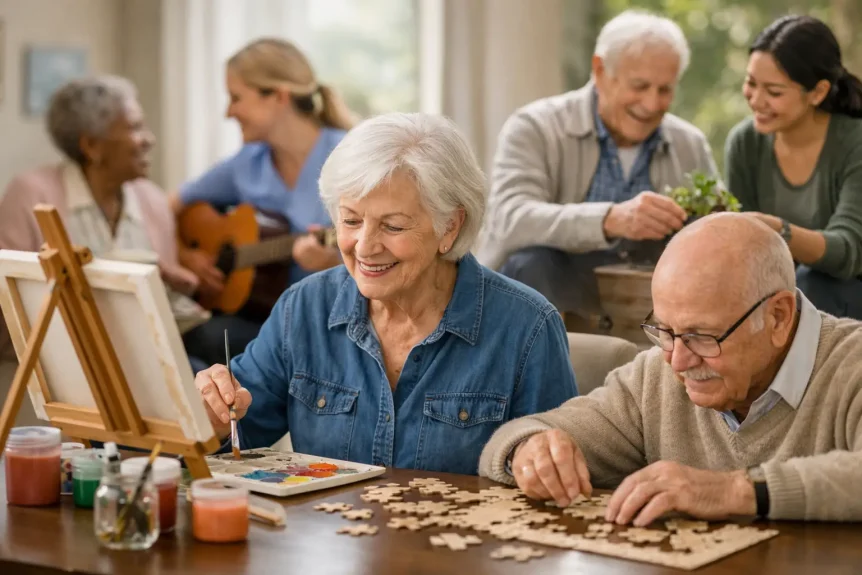
Creative expression can be especially valuable because there is no single correct outcome. Watercolor painting, coloring, collage, clay, floral arranging, and seasonal crafts invite residents to make choices about color, texture, and design.
Projects should be easy to begin and flexible enough for different ability levels. A blank page can feel intimidating, so caregivers may offer a prepared outline, a few color choices, or a partially assembled project. Praise the experience and the effort rather than judging the finished piece.
6. Gentle Movement and Chair Exercise
Movement supports circulation, flexibility, sleep, and mood, but it should always be appropriate for the resident’s health and mobility. Chair yoga, guided stretching, balloon volleyball, soft ball tosses, and music-based movement can make exercise feel social rather than clinical.
A resident who once loved sports may respond well to a simple tossing activity. Someone who enjoys dance may prefer moving their arms to familiar music. Staff should watch for fatigue, pain, or balance concerns and make adjustments quickly.
7. Baking and Food-Based Experiences
The scent of cinnamon, warm bread, or fresh coffee can create an immediate sense of home. Baking activities do not need to involve a full recipe from start to finish. Residents can stir batter, sprinkle toppings, roll dough, taste ingredients, or help choose between two simple options.
Food-based engagement is especially effective when it connects to family traditions or holidays. It also deserves thoughtful planning. Dietary needs, swallowing concerns, allergies, and kitchen safety should always guide the activity.
8. Faith, Reflection, and Familiar Rituals
For many older adults, spiritual life is woven into their identity. Hymn singing, prayer, devotional readings, pastoral visits, and quiet reflection can offer reassurance during periods of confusion or change.
Care should be personal and respectful. Some residents find comfort in a group service, while others prefer a peaceful one-on-one reading or time to hold a familiar prayer book. Familiar rituals can provide a steady anchor when other parts of the day feel uncertain.
9. Pet Visits and Animal Connection
A calm, well-supervised animal visit can encourage smiles, conversation, and gentle touch. Some residents who are less responsive in a group setting become animated when a dog rests nearby or a bird is brought in for a visit.
Not everyone enjoys animals, and allergies or fear must be respected. When live visits are not a fit, residents may still enjoy watching birds outside, looking through animal books, or caring for a realistic companion pet.
10. Small-Group Games and Sensory Activities
Games work best when they are simplified and free from competition. Matching cards, large-piece puzzles, beanbag tosses, picture bingo, and familiar word games can offer stimulation without becoming overwhelming. Small groups are often more successful than crowded rooms, especially for residents who are sensitive to noise.
Sensory activities are another valuable option. Soft fabrics, calming hand lotion, textured objects, seasonal scents, and warm blankets can ease agitation and create comfort. A sensory experience may look simple, but it can be deeply reassuring for someone whose world feels unfamiliar.
How Families Can Help Shape Better Activities
Families hold information that makes person-centered care possible. Share favorite songs, former occupations, hobbies, military history, faith practices, food traditions, and the small details that make your loved one unique. Did they always watch baseball? Did they enjoy sewing, fishing, hosting holidays, or working in the yard? Those details can guide activities that feel genuinely personal.
It also helps to be realistic about changing abilities. A loved one who once completed intricate crafts may now enjoy sorting buttons by color. This is not a loss of value. It is an opportunity to adapt the activity so it remains pleasant and achievable.
When visiting, choose connection over correction. Sit together for music, look through a photo album, take a short walk, or help arrange flowers. If your loved one loses track of the conversation, follow their feelings rather than insisting on facts.
The Environment Matters as Much as the Activity
Even the top memory care activities can fall flat in an environment that is loud, confusing, or rushed. Residents benefit from inviting spaces, consistent routines, clear visual cues, and caregivers who know when to encourage participation and when to offer quiet comfort.
At Cooperwood Senior Living, memory care is designed around the belief that every resident deserves to feel known, respected, and at home. Activities are part of that larger promise: creating days with warmth, familiar pleasures, and meaningful opportunities to belong.
If you are considering memory care for someone you love, pay attention to the everyday moments during a visit. Notice whether residents are welcomed by name, whether activities feel personal, and whether the community offers the calm, compassionate atmosphere your family member deserves.